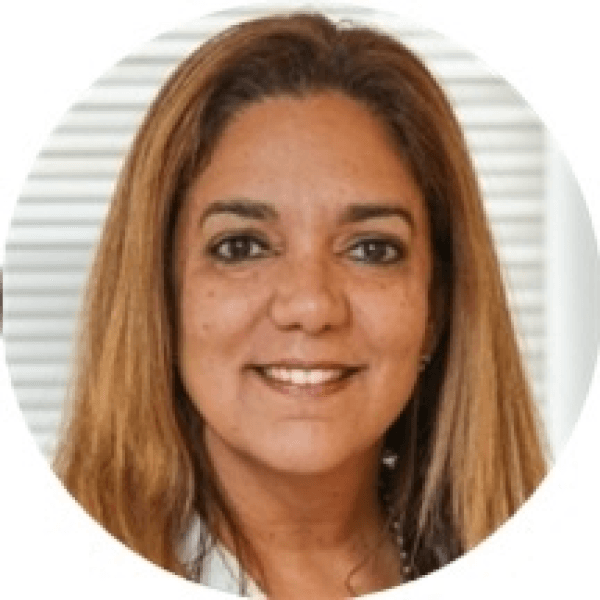
Minerva Santo-Tomas
M.D., F.A.C.C.
FL, USExperience the lessons that inspired a conventional Board Certified cardiologist to embrace heart-mind coherence and cellular adaptation. Every heartbeat tells a story. What stories will yours tell?
Thank you for visiting my profile! I hope you find my biography interesting and helpful. Let my lessons become yours!
I was born and raised in Miami Shores, Florida. A first generation Cuban American, my parents worked hard to create a stable environment where I could pursue every dream because everything was possible in America. As long as I can remember I wanted to be a doctor, but not just any doctor, a Heart Doctor! So, I studied, worked part-time at a local pharmacy, then studied some more. I attended Barry College for 5 years, graduated with honors then moved to Massachusetts to study medicine at Boston University School of Medicine. After medical school, my best friend convinced me to do my residency training in a city called Springfield somewhere in the middle of the country. So, I applied and got accepted to Southern Illinois University. There, I completed a 3 year Internal Medicine residency program and stayed an extra year as the Chief of Residents. I then returned to my hometown in metropolitan Miami where I completed a 3-year cardiology fellowship and joined a small cardiology practice in Coral Gables. It’s hard to believe that was 25 years ago!
When I was a child I developed a terrible stammer. If my life depended on it, I couldn’t put two syllables together without a 20 second delay between them! Doctors believed it was caused by acute traumatic stress following a traffic incident involving a fire engine. I was 2 years old and just starting to develop early language skills. For years my parents were convinced I had permanent brain damage. My pediatricians assured them I would outgrow it, and they were correct. After an entire childhood of ridicule, finger-pointing, and shame, I was finally able to find my voice, and find my voice I did.
Decades later, I still reflect on those early days because In many ways they prepared me for the next chapters in my life. At a very early age I had to recognize and accept that I was different from other children on so many levels. I had that terrible stammer. I was darker complexioned than most with thick, curly, dark brown hair. I had a complex Spanish surname, and I saw and heard things other children did not. Even back then I quickly learned it was sink or swim. So I taught myself how to adapt by developing early coping strategies and building my resilience.
When I started my Cardiology practice, patients would often ask me if stress could kill them. To be honest, back then I would reassure them and dismiss their concerns because I didn’t understand the long term effects of stress. In 2015, I was asked to Chair the AHA Greater South Florida chapter of the Go Red campaign. During my tenure, I spent a great deal of time researching the link between psychosocial stress and disease and how stressors not only contribute to heart-related disorders but to multiple diseases affecting society today. Shortly thereafter, I launched a grassroots not-for-profit called Healthy Hearts Initiative to identify, educate, and provide easier access to effective prevention and treatment strategies.
After 10-years plus of stress research, I have identified the numerous causes of stress, their subclasses, and understand how chronic stress leads to disease. Today when I’m asked whether stress can kill someone my answer is invariably yes! Granted, not all stress is bad. Transient stress, or allostasis, is a natural phenomenon that allows us to overcome certain physiologic challenges and adversities. On another note, long term continuous stress, in particular acute on chronic stress, triggers and/or inhibits vital feedback pathways and modifies our response to future stressors. Furthermore, as stress escalates, inflammation and cellular injury occur concurrently ultimately leading to disorders of the body, mind, and spirit.
The heart is a central, vital organ that defines our existence. It is our life source, the first of two rudimentary organ systems that support life within weeks of conception. From the moment our primitive heart develops, it does not stop until we die. In a human lifespan, it is estimated the heart will beat anywhere from 2.5 to 3 Billion times. For centuries metaphysicists, cultural theologians, and philosophers have claimed the soul resides in the heart. Recently, scientists have discovered that the heart has its own nervous system--thousands of neurons able to function independently from the brain. This may offer an explanation as to how our feelings affect our heart and vice versa. For instance, I have witnessed how heartache can lead to a damaged, broken heart. We all have an inner heart light that helps us adapt and/or respond to our surroundings. Even if the origin of biopsychosocial stressors, cellular synchronicity, and heart-mind cohesiveness remain unclear there is one thing I can be certain of…Everything is connected!
Thank you for visiting my profile! I hope you find my biography interesting and helpful. Let my lessons become yours!
I was born and raised in Miami Shores, Florida. A first generation Cuban American, my parents worked hard to create a stable environment where I could pursue every dream because everything was possible in America. As long as I can remember I wanted to be a doctor, but not just any doctor, a Heart Doctor! So, I studied, worked part-time at a local pharmacy, then studied some more. I attended Barry College for 5 years, graduated with honors then moved to Massachusetts to study medicine at Boston University School of Medicine. After medical school, my best friend convinced me to do my residency training in a city called Springfield somewhere in the middle of the country. So, I applied and got accepted to Southern Illinois University. There, I completed a 3 year Internal Medicine residency program and stayed an extra year as the Chief of Residents. I then returned to my hometown in metropolitan Miami where I completed a 3-year cardiology fellowship and joined a small cardiology practice in Coral Gables. It’s hard to believe that was 25 years ago!
When I was a child I developed a terrible stammer. If my life depended on it, I couldn’t put two syllables together without a 20 second delay between them! Doctors believed it was caused by acute traumatic stress following a traffic incident involving a fire engine. I was 2 years old and just starting to develop early language skills. For years my parents were convinced I had permanent brain damage. My pediatricians assured them I would outgrow it, and they were correct. After an entire childhood of ridicule, finger-pointing, and shame, I was finally able to find my voice, and find my voice I did.
Decades later, I still reflect on those early days because In many ways they prepared me for the next chapters in my life. At a very early age I had to recognize and accept that I was different from other children on so many levels. I had that terrible stammer. I was darker complexioned than most with thick, curly, dark brown hair. I had a complex Spanish surname, and I saw and heard things other children did not. Even back then I quickly learned it was sink or swim. So I taught myself how to adapt by developing early coping strategies and building my resilience.
When I started my Cardiology practice, patients would often ask me if stress could kill them. To be honest, back then I would reassure them and dismiss their concerns because I didn’t understand the long term effects of stress. In 2015, I was asked to Chair the AHA Greater South Florida chapter of the Go Red campaign. During my tenure, I spent a great deal of time researching the link between psychosocial stress and disease and how stressors not only contribute to heart-related disorders but to multiple diseases affecting society today. Shortly thereafter, I launched a grassroots not-for-profit called Healthy Hearts Initiative to identify, educate, and provide easier access to effective prevention and treatment strategies.
After 10-years plus of stress research, I have identified the numerous causes of stress, their subclasses, and understand how chronic stress leads to disease. Today when I’m asked whether stress can kill someone my answer is invariably yes! Granted, not all stress is bad. Transient stress, or allostasis, is a natural phenomenon that allows us to overcome certain physiologic challenges and adversities. On another note, long term continuous stress, in particular acute on chronic stress, triggers and/or inhibits vital feedback pathways and modifies our response to future stressors. Furthermore, as stress escalates, inflammation and cellular injury occur concurrently ultimately leading to disorders of the body, mind, and spirit.
The heart is a central, vital organ that defines our existence. It is our life source, the first of two rudimentary organ systems that support life within weeks of conception. From the moment our primitive heart develops, it does not stop until we die. In a human lifespan, it is estimated the heart will beat anywhere from 2.5 to 3 Billion times. For centuries metaphysicists, cultural theologians, and philosophers have claimed the soul resides in the heart. Recently, scientists have discovered that the heart has its own nervous system--thousands of neurons able to function independently from the brain. This may offer an explanation as to how our feelings affect our heart and vice versa. For instance, I have witnessed how heartache can lead to a damaged, broken heart. We all have an inner heart light that helps us adapt and/or respond to our surroundings. Even if the origin of biopsychosocial stressors, cellular synchronicity, and heart-mind cohesiveness remain unclear there is one thing I can be certain of…Everything is connected!
Secrets of Her Heart
Every 80 seconds, a woman suffers a fatal cardiovascular event in the US. In fact, 1 in 3 women die every year from heart related diseases or stroke. Currently, there are an estimated 50 million women in the US affected by cardiovascular disease and 90% of women have one or more cardiac risk factors that predispose them and their families to catastrophic cardiac events. Not only is the incidence of heart disease more prevalent among women, but women have a lower rate of survival...
How Stress Kills
Stress is currently the most modifiable risk factor second only to smoking. For years, I had been asked by patient's if stress could kill. Too often I reassuringly brushed off their question because at the time there was no clinical evidence linking stress to cardiovascular disease or death. Now I know better.
We all have some degree of stress in our lives and not all stress is necessarily harmful. In fact, common intermittent adversity usually leads to growth and builds...
Lessons From Their Hearts
Format: 30 minutes [keynote, workshop, breakout]
This program is perfect for:
-Individuals interested in pursuing careers in cardiovascular medicine
-Individuals interested in learning about heart-related diseases, the Social Determinants of Health, and a biopsychosocial model of cardiovascular health and wellness.
The audience...
COVID-19, Post-COVID Syndrome, and Neuro COVID: A Continuous Conundrum
Format: 30-45 minute [any format]
This program is perfect for:
- Individuals seeking to gain a better understanding of Long Haul COVID
- Individuals who oversee and manage requests for medical leave of absence or disability claims
The audience will leave with:
- A better understanding of the differences between acute COVID-19, Long COVID, and Neuro...